Creaking timber stairs can quickly become a noticeable frustration in any home, especially when every step brings an unwanted squeak or groan. While some homeowners may assume that noise is simply part of living with a timber staircase, persistent creaking often points to movement between components, changes in the timber or issues with the original installation. For homeowners considering or maintaining timber stairs in Melbourne, understanding why these sounds occur can help determine whether the problem is minor or requires professional attention.
Dixon Stairs understands that a well-designed staircase should provide lasting structural performance as well as everyday comfort. This article explores the common causes of creaking timber stairs, including movement between treads and risers, friction between components, moisture and humidity changes, loose fixings and general wear. It also looks at how material selection, design detailing and installation quality can influence staircase noise over time, helping homeowners understand what may be causing the problem and which solutions may be appropriate.
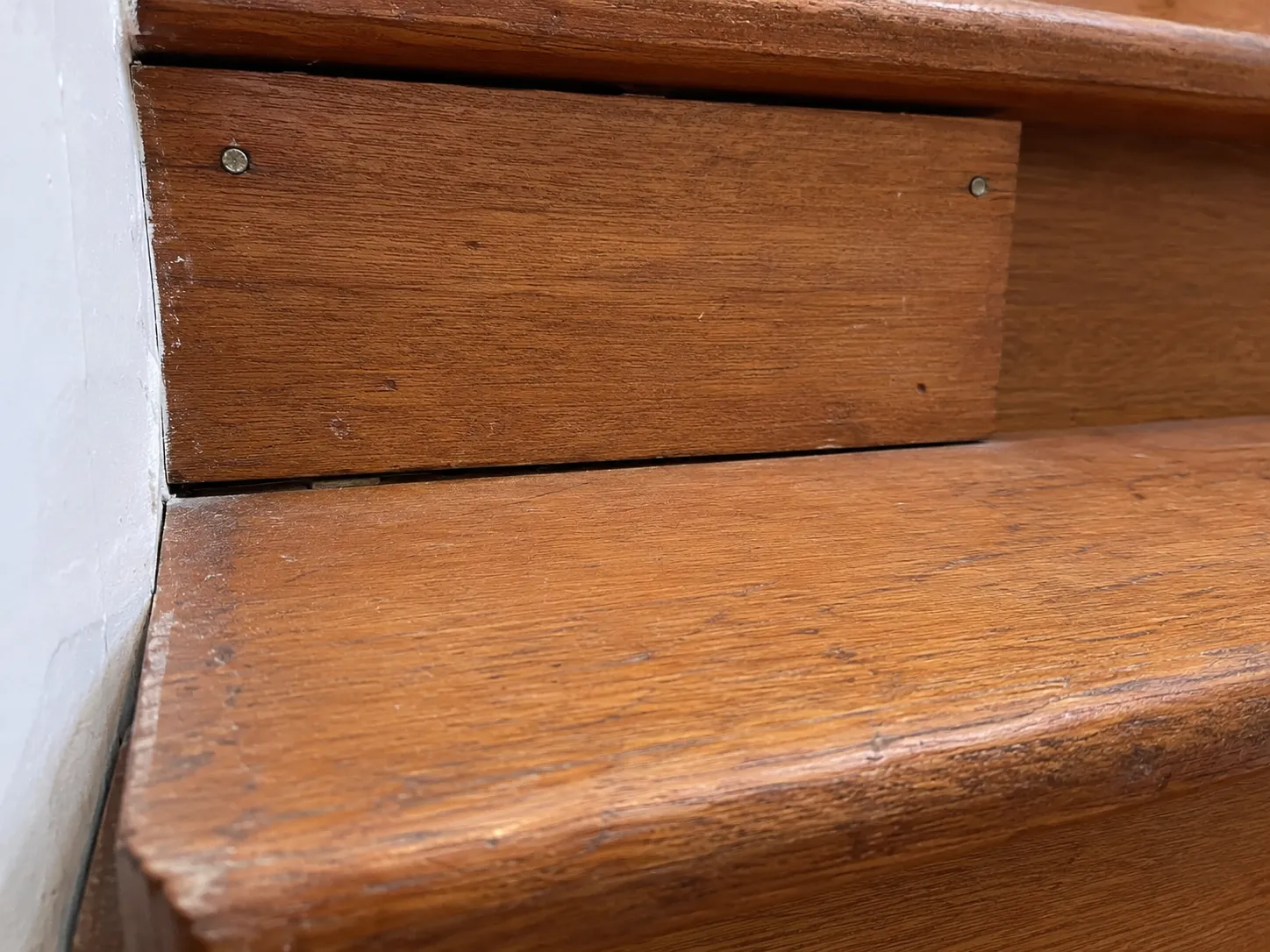
Loose treads, risers and joints are among the most common causes of creaking in timber staircases. When one of these components moves slightly under load, friction between timber surfaces or around fixings can produce the familiar squeak or creak.
Noise caused by loose components is often most noticeable on individual steps or in particular areas, such as the middle of the flight or along one side. In some cases, the sound becomes more noticeable over time as movement increases and fixings continue to loosen.
The tread is the horizontal surface that is stepped on. It should be firmly supported by the stringers and securely connected to the adjoining riser. If these connections loosen, the tread can flex slightly and rub against neighbouring timber or fixings each time weight is applied.
Common signs can include movement underfoot, a visible gap between the tread and riser or small gaps where the tread meets the stringer. The noise occurs as these surfaces move against one another or as a fixing shifts slightly within the timber.
Depending on the staircase design and accessibility, repair may involve tightening or replacing fixings from underneath the staircase. Appropriate timber screws are often used instead of adding more nails, as screws can provide a more secure connection. In some situations, a suitable adhesive may also be introduced into an accessible joint before it is refixed.
The riser is the vertical board between two treads. Although it does not carry direct downward pressure in the same way as the tread, it helps stiffen the step and reduce movement.
If a riser begins to separate from the tread above or below it, a small gap can develop. The tread may then flex against the edge of the riser when stepped on, creating a creak near the front or rear of the step. Cracked or damaged risers may also contribute to vibration and movement around existing fixings.
Depending on the condition of the staircase, repair can involve securing the riser more firmly to the tread and using an appropriate adhesive to stabilise the joint. Split or substantially damaged components may need to be repaired or replaced.
Even when individual treads and risers appear to be in good condition, joints elsewhere in the staircase can contribute to noise. Common areas include:
As a staircase ages, timber can shrink slightly and older fixings can loosen. This can leave small gaps that allow components to shift when weight is placed on the stairs.
The appropriate repair depends on the cause and construction of the staircase. It may involve securing loose connections, adding suitable support beneath affected treads or stabilising accessible joints with an appropriate adhesive. The aim is to minimise movement without unnecessarily altering the staircase.
Timber is a natural material that responds to changes in its environment. Variations in humidity can cause timber stairs to expand and contract, while repeated environmental changes may gradually contribute to small gaps or loosened joints.
This helps explain why a staircase may be quiet during one period of the year and noticeably noisier during another. Understanding how Melbourne’s climate affects timber stairs can also help homeowners manage seasonal movement, visible gaps and changes in staircase noise.
Timber absorbs and releases moisture from the surrounding air. In humid conditions, it can absorb moisture and expand. When the air becomes drier, it releases moisture and contracts. This movement generally occurs more noticeably across the width and thickness of timber than along its length.
Different staircase components can also move by slightly different amounts. A broad tread, for example, may respond differently to environmental changes than a narrower riser. When adjoining parts move differently, small gaps or changes in pressure can develop around joints and fixings.
The amount of movement depends on several factors, including timber species, moisture content, how well the timber was seasoned before installation and the type of finish applied.
Seasonal humidity changes can influence how much timber moves. In more humid conditions, components may expand slightly and fit more tightly together. During drier periods, timber can contract and small gaps may become more noticeable.
Indoor heating and cooling can also contribute by changing temperature and moisture levels throughout the home. Staircases positioned near sunny windows or areas with greater environmental variation may experience more frequent changes.
Bathrooms, kitchens and laundries can also create localised humidity changes. If a staircase is close to these areas, controlling moisture and maintaining good ventilation can help reduce unnecessary fluctuations.
Timber movement can contribute to creaking in several ways:
When someone steps on the staircase, these small movements can cause surfaces or fixings to rub together and create noise.
Maintaining reasonably stable indoor conditions can help limit excessive movement, although some natural expansion and contraction should be expected with timber.
In some cases, persistent stair noise originates deeper within the staircase rather than from the tread surface itself. Movement in the stringers or supporting framework can affect several steps and may create creaks or groans throughout the flight.
Stringers form an important part of the staircase structure, supporting the treads and risers along each side. If they are not securely supported or have developed movement over time, the effects can be transferred to the visible parts of the stair.
Stringers are generally secured at the top and bottom of the staircase to the surrounding structure. If these connections loosen, the stair flight may move slightly under load.
Potential causes can include ageing fixings, inadequate original connections, deterioration in the supporting material or repeated movement over time.
Where the underside or side of the staircase is accessible, signs can include visible gaps between the stringer and surrounding framing, movement around fixings or cracking in nearby finishes.
Depending on the extent of the problem, professional repair may involve reinforcing existing connections, replacing unsuitable fixings or installing additional support where necessary.
Some staircases can develop movement if the supporting structure is insufficient or has been altered. Longer flights may be more susceptible to noticeable flex if support between the ends of the staircase is inadequate.
Staircases rely on stringers, landings and surrounding framing to distribute loads. If supporting timber has been modified, damaged or inadequately sized, movement may occur when the stairs are used.
Where this is identified as the cause, a suitable repair might involve adding further blocking, brackets or other support. Because changes to structural components can affect staircase safety and performance, these repairs are best assessed according to the construction of the individual staircase. Victorian guidance on the structural requirements for stair and barrier design also explains that internal stairs, barriers and their connections must be capable of supporting the applicable loading forces.
Natural timber shrinkage and minor building movement can also contribute to stair noise. As materials adjust over time, a stringer may develop a small gap against an adjoining wall, floor or supporting member.
Minor gaps may sometimes be stabilised using suitable packing or adhesive products. More noticeable movement, particularly where the surrounding floor or landing has shifted, may require assessment to determine whether additional support or adjustment is needed.
Finding the source of a stair creak is useful before deciding how it should be repaired. Although noise can seem to travel through the staircase, it is often connected to a particular tread, riser, joint or fixing point.
Listening for changes in sound and watching for visible movement can help narrow down the problem.
Begin by walking slowly up and down the staircase and testing one step at a time. Place weight near the centre of each tread, then carefully test closer to the front and back edges.
Note which steps make noise and whether the sound becomes louder in a particular position.
If a creak occurs mainly when weight is applied to one side of a tread, movement may be occurring near the connection between the tread and stringer. If it occurs near the front of the step, the tread-to-riser connection may be involved.
Avoid deliberately placing excessive weight on a tread that already feels loose, damaged or unstable. If noticeable movement is present, professional assessment is the safer option.
Once a noisy step has been identified, listen carefully while normal pressure is applied. A sharper squeak can sometimes indicate two surfaces rubbing together, while a deeper creak may be associated with movement around a fixing or supporting component.
If it can be done safely, watch the joints between the tread, riser and stringer while another person carefully steps on the stair. A visible gap that opens and closes can help identify the area responsible for the sound.
Any obvious movement, cracking or instability should be treated as a reason to stop further testing and have the staircase inspected.
If the underside of the staircase is easily and safely accessible, it may provide a clearer view of the connections between components.
Look for visible gaps, loose wedges, withdrawn nails or screws and areas where two timber surfaces appear to be moving against each other.
For enclosed staircases, the location of the sound can still provide useful clues. Noise concentrated along the side of the staircase may indicate movement near the stringer, wall or decorative trim rather than in the centre of the tread.
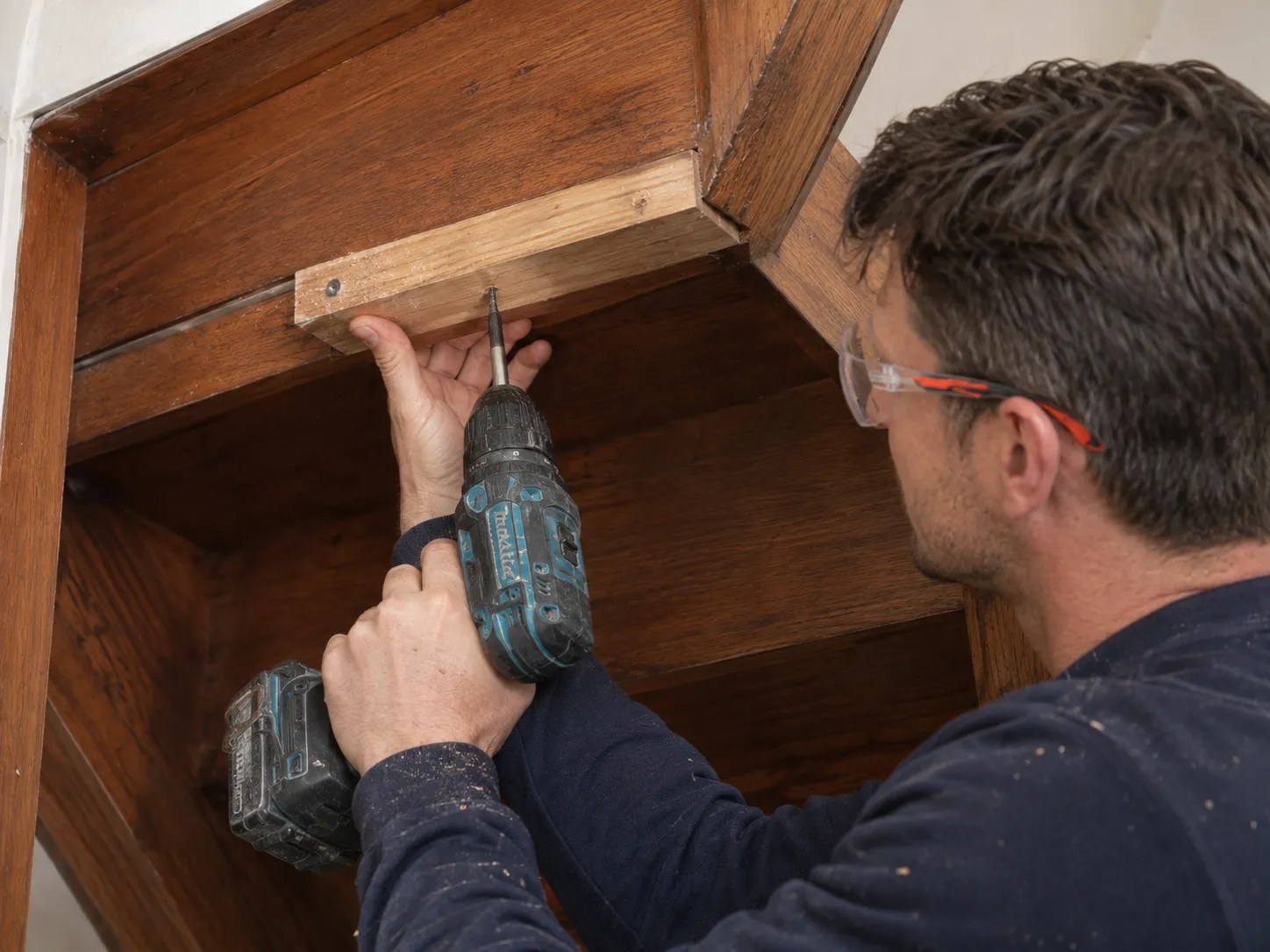
The right repair depends on why the staircase is creaking and how it has been constructed. In many cases, the goal is to reduce movement between components so that timber surfaces and fixings no longer rub against one another.
Minor problems may sometimes be addressed with discreet repairs, while more significant movement can require access beneath the stairs or work on structural connections.
If a tread or riser has loosened, repair generally focuses on restoring a firm connection between the affected components.
Where the underside is accessible, suitable screws or other fixings may be installed to secure the tread or riser. Pilot holes can help reduce the risk of splitting the timber.
For staircases that cannot be reached from underneath, a professional may be able to use discreet fixings from above and conceal the repair to maintain the appearance of the staircase.
Suitable adhesive may also be used in some accessible joints to reduce movement. If a housed joint has opened significantly, the original wedges or packing may need to be adjusted or replaced.
The exact method should suit the staircase construction rather than simply adding fixings wherever a noise is heard.
Older nails and other fixings can gradually loosen as timber moves and the staircase is repeatedly used. Where this is the cause, the repair may involve replacing or supplementing unsuitable fixings with screws or another appropriate fastening method.
On carpeted stairs, movement can sometimes occur beneath the floor covering. Access may be required to secure the tread or underlying component properly before the carpet is replaced.
Loose brackets and other metal fittings can also cause noise. These may need tightening, replacing or isolating from adjoining timber so that the materials no longer rub against one another.
Fine gaps caused by timber shrinkage may sometimes be stabilised with a suitable timber adhesive where appropriate. However, the underlying reason for the movement should be considered before attempting to seal or fill a joint.
Treads that are substantially worn, cracked, distorted or excessively flexible may need more extensive repair or replacement rather than repeated refixing. Where the main framework remains sound, updating an old staircase may involve replacing selected treads, risers, fixings or finishes without rebuilding the entire structure.
If movement affects the staircase as a whole, the problem may lie within the stringers, landing connections or surrounding framing. In these cases, professional assessment can determine whether additional support or reinforcement is required.
An occasional light creak does not necessarily mean that a timber staircase is unsafe. Timber naturally moves over time, and some noise can occur without indicating a serious problem.
However, persistent or changing sounds deserve closer attention when they are accompanied by noticeable movement, damage or a change in how solid the staircase feels underfoot.
Professional assessment is advisable when a creak occurs alongside signs such as:
These symptoms can be associated with loose fixings, weakened joints, damaged components or excessive movement within the staircase.
A professional inspection can help establish whether the problem is limited to a noisy connection or whether further repair is required.
Creaking combined with visible damage should be investigated promptly. Warning signs can include:
Official Victorian guidance on checking balustrades and handrails recommends looking for loose, unstable, deteriorated or inadequately secured components. These signs do not automatically mean that the staircase is unsafe, but they can indicate deterioration or movement that warrants professional assessment.
Even where there is no obvious structural damage, an inspection can be worthwhile in certain circumstances, including:
Early inspection can help identify the cause before movement or wear becomes more extensive. It can also prevent unnecessary repairs by ensuring the problem is correctly diagnosed before work begins.
Creaking timber stairs are commonly associated with movement between treads, risers and joints, changes in moisture levels, ageing fixings or movement within the supporting structure. While occasional noise may simply be a characteristic of timber, persistent creaking accompanied by visible gaps, excessive flexing, cracks or other movement deserves closer attention. Identifying where the sound originates is the first step towards choosing a suitable repair and reducing further wear.
Dixon Stairs can assess the condition of a staircase, identify the likely source of unwanted noise and determine whether minor remedial work or more extensive repairs may be appropriate. Addressing persistent creaks early can help maintain the comfort, stability and long-term performance of timber stairs while preventing small areas of movement from becoming more significant over time.

