A tired or outdated staircase can affect the character and flow of an entire home, even when the surrounding interiors have already been modernised. In many cases, however, a complete rebuild is not the only option. With the right assessment and design approach, existing stair structures can often be transformed through updated treads, risers, balustrades, handrails, finishes and lighting while the original framework remains in place. For homeowners considering upgrades to internal stairs in Melbourne, understanding what can safely be retained and what should be replaced is essential.
Modern staircase renovations are not only about appearance. Structural condition, compliance with current regulations, durability and day-to-day functionality all influence the success of the project. Careful assessment of the existing staircase helps determine whether cosmetic improvements are suitable or whether targeted structural repairs are required before refinishing begins. With the right combination of retained structure, new materials and quality workmanship, an ageing staircase can become a standout architectural feature that improves both the look and usability of the home.
Many staircases that look tired or dated still have a solid underlying structure. When the main framework is sound, a full rebuild may be unnecessary and can sometimes add avoidable cost and disruption. A significant portion of the visible staircase can often be updated while the core structure remains in place, provided it is safe, stable and compliant with relevant building requirements.
The key is to focus on the parts that are seen and used every day. Treads, risers, balustrades, handrails and surface finishes can often be repaired, replaced or upgraded without removing the main stringers or supporting walls. This allows the staircase to take on a completely different appearance while still making practical use of the existing structure.
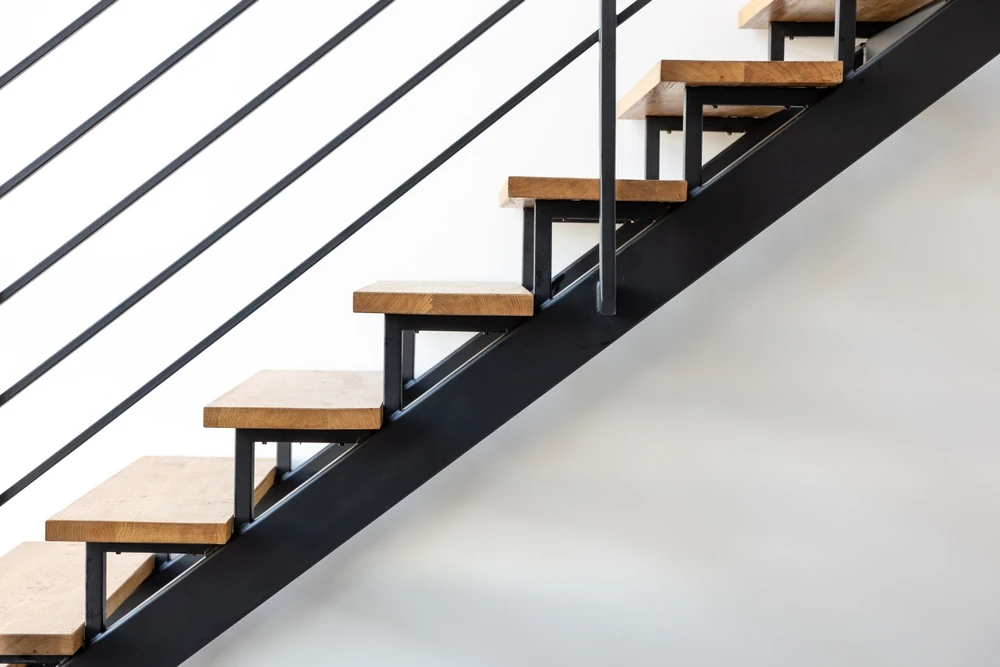
Treads and risers carry much of the visual impact of a staircase and are often the first elements to show wear. As long as the existing structure is level, secure and suitable for the proposed finish, several changes may be possible.
New tread caps can be fitted over existing treads to change the material, colour or finish. For example, dated softwood can sometimes be capped with oak, engineered timber or stair-specific laminate to create a more modern appearance without replacing the whole flight.
Risers can also be replaced, painted or overclad. Solid timber risers can be changed to painted MDF or decorative panels, while open risers may sometimes be closed in, depending on the existing structure and applicable regulations.
A painted or stained finish can completely change the character of a staircase. Sanding and refinishing treads and risers with a hardwearing floor coating often provides a cost-effective transformation. Anti-slip nosings or inserts can also be added to improve safety and update the appearance without major structural alteration.
The balustrade is usually one of the most visible design elements of a staircase, and in many homes, it is also the part that makes the staircase feel dated. Balusters, spindles, handrails and sometimes newel posts can often be upgraded while the stair carcass remains intact.
Timber spindles may be removed and replaced with simpler timber profiles, metal balusters or glass panels set into suitable channels or clamps. This can shift a traditional staircase towards a more contemporary look while improving sightlines through the stairwell.
Handrails can also be upgraded by fixing a new rail to existing newel posts or wall supports where those elements remain secure. Changing from a bulky profile to a slimmer, more comfortable handrail can improve both appearance and grip.
Newel posts can sometimes be retained and visually updated rather than fully removed. Sleeving, cladding or adding new caps can modernise the look without disturbing important structural junctions at the stair base, landing or balustrade connection points.
Where the main stringers are structurally sound, they can often be improved visually without replacement. Decorative trims can be removed for a cleaner line, or new mouldings can be added where a more traditional finish is preferred.
Cladding can also be applied to the sides or underside of the staircase. Boxing in the underside with plasterboard, timber or panelling can create a neater finish and may allow for integrated storage, lighting or a more resolved hallway design.
Surface finishes are often the simplest upgrade. Sanding and refinishing timber, replacing carpet runners or adding stair-specific vinyl can modernise an older flight at relatively low cost while the core structure remains unchanged.
Before investing in new treads, balustrades or finishes, the existing staircase needs to be assessed carefully. Cosmetic upgrades will only perform well if the structure beneath is sound, safe and suitable for the proposed materials. Skipping this step can lead to finishes being installed over movement, decay or non-compliant components that need to be corrected later.
A proper check also helps determine what can stay and what should be replaced. In many cases, the basic framework of the staircase is perfectly usable even if the visible surfaces look dated. Identifying structural strengths and weaknesses early allows for a more targeted upgrade instead of an unnecessary full replacement.
The main reason to inspect the existing staircase first is safety. Over time, timber can loosen, metal fixings can corrode and concrete or masonry supports can crack. Visual and physical checks should focus on signs such as:
Movement in the treads or risers when stepped on
Creaking accompanied by noticeable flex
Loose or wobbling handrails and balusters
Visible splits, rot or insect damage in stringers or treads
Rusting brackets or fixings at wall or floor junctions
If the staircase moves under load or shows signs of decay, the structure may not safely support new cladding, glass or heavier finishes. In more serious cases, structural repair or partial replacement may be needed before any aesthetic work begins.
Even if a staircase feels solid, it may not meet current safety expectations. Older stairs often have steeper pitches, narrow treads, inconsistent riser heights or low handrails that may no longer suit modern standards. Before updating, it is important to measure and review:
Riser height and tread depth
Consistency of riser and tread sizes from top to bottom
Overall width of the staircase
Height and continuity of handrails
Gaps between balusters or within open risers
If measurements fall significantly outside current requirements, an upgrade may need to address those issues rather than simply covering them. This is especially important when adding features such as open risers, frameless glass or new balustrades, as these changes can make older compliance issues more obvious.
A careful check of the existing staircase helps control costs. Sound stringers, posts, support structures and steel components can often remain in place and form the backbone of a modernised design. These elements may only need minor repairs, refinishing or concealment within the new finish.
Other parts should not be reused if they are damaged, unstable or unsuitable for the planned upgrade. Treads that are heavily cupped or bowed may not accept new coverings cleanly. Balusters that are loose, undersized or poorly spaced may not safely support a new handrail. Identifying these issues at the start avoids retrofitting problems once new finishes are in place and allows for more accurate budgeting.
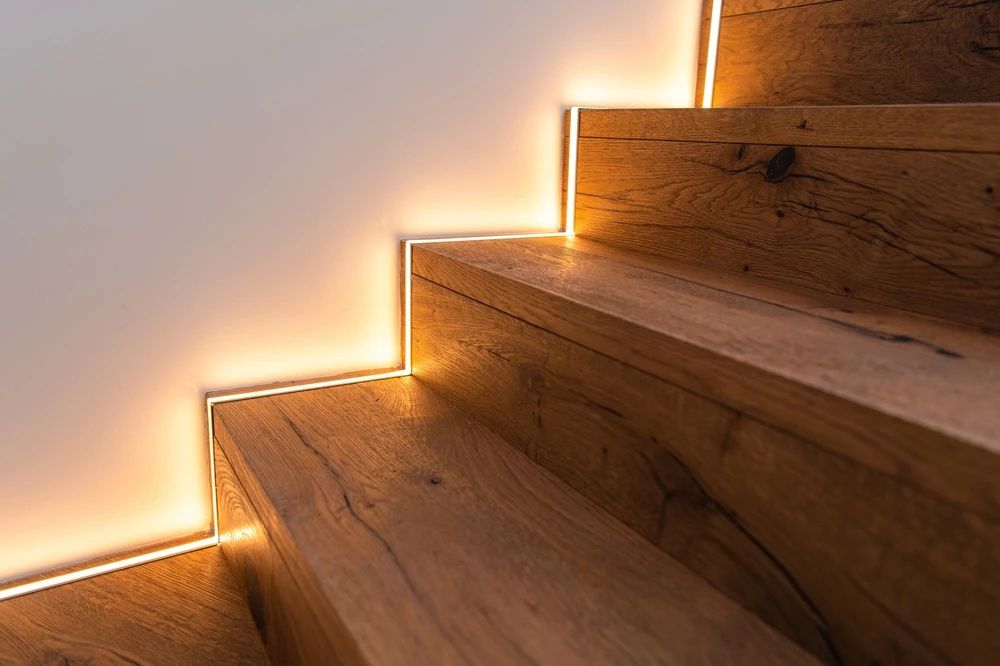
Targeted updates to an existing staircase can completely change how a hallway, entrance or living area feels without requiring full structural replacement. Materials, colours, lighting and detailing all influence the style, openness and perceived size of the surrounding space.
Before choosing upgrades, it helps to decide whether the goal is to make the staircase feel lighter and more open, warmer and more traditional or sharper and more contemporary. The following elements usually have the biggest visual impact.
The tread and riser surfaces dominate what is seen when looking at a staircase head-on. Swapping carpet for timber can make a staircase feel more solid and architectural, while new carpet can soften acoustics and create a warmer feel underfoot.
Painting or cladding risers can also change the sense of height and depth. Dark treads with white risers create a crisp, modern contrast. Matching treads and risers in one timber tone gives a calmer and more classic finish. Changing the nosing profile from rounded to square can also shift the staircase from traditional to contemporary without altering the main structure.
Lighter finishes, such as pale oak or painted timber, can help narrow stairwells feel brighter. Rich stains or darker paint colours create a more dramatic look and are often better suited to larger entryways, wider flights or homes with strong architectural detailing.
Balustrades and handrails sit at eye level, so changes in this area can have a major effect on the overall style. Replacing heavy timber spindles with slim metal balusters or glass panels can open up sightlines and allow more light through the stairwell. This is especially effective in enclosed areas that feel dark or boxed in.
Keeping existing newel posts but updating the spindles to a simpler square profile can move a staircase away from ornate traditional styling towards a cleaner transitional look. Changing the handrail from chunky varnished timber to a slimmer stained or painted profile can also make the entire flight feel lighter.
Colour contrast plays an important role as well. A dark handrail against light spindles creates a strong visual line that guides movement up and down the stairs. Painting balustrades and newel posts the same colour as the wall can help them recede, making the staircase feel less visually busy.
Paint colours and lighting upgrades influence how safe, comfortable and spacious a staircase feels. Light neutral wall colours reflect available light and help enclosed staircases feel less cramped. A darker feature colour on the stair wall can create a stronger design statement, especially when paired with simple white risers and skirting.
Additional lighting, such as wall lights, LED strip lighting under a handrail or discreet step lights in the risers, can make the staircase feel more inviting and improve visibility. Warmer light temperatures often suit traditional interiors, while cooler white light can complement modern glass, metal or pale timber finishes.
Finishing details such as new skirting boards along the string, updated trims around landings and coordinated metal finishes on brackets, clamps and caps help the staircase look intentionally designed rather than partly updated. Small, consistent choices in colour and hardware can make the finished result feel more cohesive.
Some staircases can be refreshed with cosmetic upgrades alone, while others require selective replacement of critical components. Partial replacement becomes necessary when specific parts are damaged, non-compliant or no longer suitable, but the main framework remains serviceable. Identifying these situations early prevents minor issues from becoming safety hazards or forcing a full rebuild later.
A careful inspection of treads, risers, stringers, handrails and balustrades reveals where targeted work is needed. In many homes, only certain parts of the staircase have deteriorated through age, movement, moisture or previous repairs. Addressing these elements while retaining sound components helps control cost and disruption while still delivering a safe and updated staircase.
Visible movement or deflection underfoot is a strong sign that simple refinishing is not enough. If treads bounce, creak heavily with every step or feel springy, the underlying fixings or stringers may be failing. In these situations, loose treads may need to be replaced, and sections of the stringers may need to be strengthened or repaired.
Rot, insect damage or corrosion on timber or metal components is another clear reason to go beyond cosmetic work. Soft or crumbling timber around tread edges, the base of newel posts or the stringer line indicates that the material may have lost strength. Localised replacement of damaged timber, combined with improved moisture control, can restore safety without necessarily discarding the entire staircase.
A slope or sag in the flight also points to deeper issues. Where one side of the staircase has dropped or several treads sit out of level, targeted structural repairs may be required. This can involve reinforcing existing stringers, replacing distorted treads and risers or correcting failed fixings before any new finish is applied.
Partial replacement often focuses on specific elements that are worn, damaged or no longer suitable for modern safety expectations. Common examples include:
Treads that are cracked, deeply gouged or too thin from repeated sanding
Risers that are split, loose or missing
Handrails that are too low, too wide to grip or poorly anchored
Spindles or balusters that are broken, excessively spaced or mismatched after earlier alterations
Replacing only these parts allows the staircase to be improved while preserving original stringers or support structures where they remain sound. It also enables a style update through new tread materials, modern balustrades or a reshaped handrail without the cost and disruption of full demolition.
Older staircases often predate current building regulations. While not every existing staircase needs to be fully rebuilt simply because it is old, certain renovation works can highlight or trigger the need to address obvious safety issues. In many cases, this results in targeted upgrades rather than complete replacement.
Situations that may require attention include very steep flights, inconsistent riser heights, narrow treads that do not provide safe footing or balustrades with gaps large enough to create a safety risk. Increasing tread depth, replacing guardrails, upgrading handrails or adjusting balustrade heights may be more practical than removing the whole staircase.
A professional assessment can determine whether these corrections can be achieved through partial replacement within the constraints of the existing structure or whether a full rebuild is the safer long-term option.
Revitalising an old staircase without replacing the entire structure requires a careful balance between retaining what still performs well and upgrading what no longer suits the space. Structural integrity, safety compliance, material durability and visual cohesion should guide every decision. Well-planned updates can improve the appearance and function of a staircase while avoiding the cost and disruption of a complete rebuild. When the existing framework is sound and the right components are replaced, an ageing staircase can become a more refined and practical feature within the home.

