Sharing your home with pets brings plenty of joy, but it also adds extra wear to timber stairs. Claws, occasional accidents and daily foot traffic can quickly dull a beautiful staircase if the finish is not suited to the task. Dixon Stairs helps homeowners choose finishes that protect timber from scratches, moisture and stains while still showcasing its natural character and complementing the style of the home. This article explores which timber stair finishes cope best with pets, how they perform in real homes and what to expect in terms of durability, maintenance and appearance.
It examines the strengths and weaknesses of popular finish options, including how sheen levels affect visible wear and slip-resistance for both paws and feet. Practical considerations that matter to pet owners are also covered, helping readers weigh up protection, safety and style when choosing timber stairs in Melbourne for a pet-friendly home.
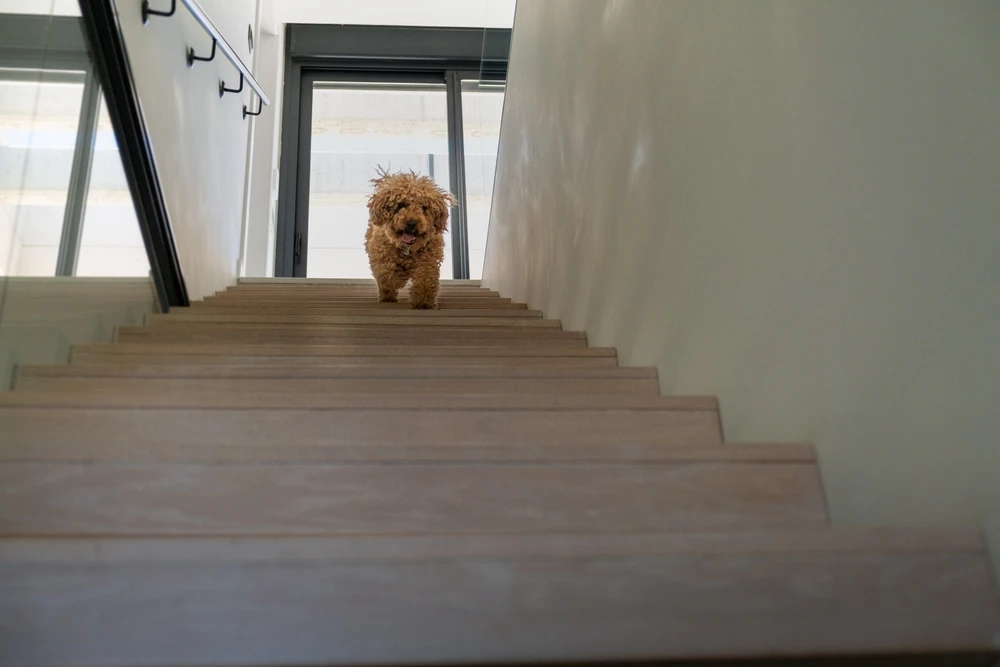
Timber stairs that feel perfectly safe underfoot for people can be very different for pets. The combination of smooth timber grain, hard finishes and small paw pads means many popular coatings become surprisingly slippery for dogs and cats, especially when they move quickly or jump.
Understanding what makes a finish slippery helps when selecting products that still protect the timber while providing enough grip for claws and pads. The issue is rarely the timber itself. It is usually the surface film applied over it.
Many modern timber stair finishes create a hard, continuous film over the surface. While this is excellent for stain resistance, it can reduce friction for pets.
Two common culprits are:
These finishes level out as they cure, which fills minor pores and grain texture. The smoother and more reflective the surface, the less grip paw pads can gain. When pets launch off a step or change direction quickly, the lack of microscopic roughness means their pads glide before their claws can bite into the surface.
Human feet in shoes rely on rubber soles and a relatively large contact area. Pets rely on softer pads and retractable claws, which behave differently on coated timber.
On smooth, glossy finishes, pads tend to compress without deforming enough to create grip. At the same time, claws may not penetrate the film easily, so instead of digging in, they can skate across the coating. This is most noticeable when:
Nail length also matters. Longer nails lift part of the paw off the surface, so more weight is carried on a small, hard point. On a slick finish, that single point has very little friction, which increases sliding, especially when descending.
Pets add an extra layer of slip risk on timber stairs because of fast movement and hard nails. The right finish can improve traction for paws and people while still protecting the timber and maintaining a refined appearance. Certain products and application methods are better suited to increasing grip and reducing the chance of skids on stair treads.
Grip is influenced by both the chemistry of the finish and the texture it leaves on the surface. High-gloss, glassy coatings tend to be more slippery, while low-sheen finishes, additives and carefully controlled surface texture create more secure footing. The most suitable option should take into account a pet’s size, age and mobility, along with the level of traffic the stairs receive.
For timber stairs that need strong protection and better grip, a low sheen or satin polyurethane with an anti-slip additive is a reliable choice. Water-based polyurethanes are often preferred indoors because they have lower odour, faster drying times and keep timber closer to its natural colour compared with oil-based products.
Anti-slip additives are fine aggregates or polymer beads mixed into the final coat. They slightly roughen the surface so paws and shoes can grip more effectively. For residential use, the goal is a subtle texture that is comfortable on bare feet while still increasing friction.
Most manufacturers supply specific non-slip granules for their coatings. These should be measured according to instructions and stirred thoroughly into the finish immediately before application to prevent settling. The additive is usually used only in the top coat on stair treads and landings so risers and stringers can retain a smoother look.
Satin or matte versions also assist with grip since they reflect less light and are less likely to feel slippery under socks. High-gloss versions are generally less suited to pet-friendly stairs, even when additives are used.
Hardwax oil finishes penetrate into the timber and then cure to form a breathable surface film with a more natural feel underfoot. These products tend to be less slippery than thick film coatings because the timber grain remains lightly textured rather than fully encased.
Many modern hardwax oils are available in matte or ultra-matte sheens, which further improves perceived grip. On stairs used by pets, this finish works best when applied in multiple thin coats with light denibbing between coats to avoid polishing the surface too smooth.
Some manufacturers produce slip-rated versions of hardwax oils or recommend specific application methods for stairs, such as an extra coat brushed across the grain on treads. These options are worth prioritising where elderly pets or children use the staircase frequently. Regular maintenance coats are straightforward, which helps maintain traction rather than allowing wear to create slick patches.
In situations where maximum grip is needed on timber stairs, such as homes with very energetic dogs or elderly occupants, a dedicated textured clear coat can be used. These products incorporate coarser particles that create a noticeable micro-profile on the surface.
To retain a refined appearance, it is common to confine higher texture to the nose of each tread where contact is greatest. This can be achieved with:
Both approaches allow the natural timber colour to show through while boosting traction. When selecting strips, the profile should be low enough to avoid catching toes but textured enough to resist sliding under wet paws. Regular cleaning is important because dirt build-up can reduce the effectiveness of any textured finish over time.
Homes with pets place extra stress on timber stairs. Claws, occasional accidents and grit tracked in from outside can quickly dull soft or poorly protected timber. A durable finish is essential for preserving the appearance of the staircase and reducing how often sanding or refinishing is required. The most reliable options create a hard protective layer on the surface that resists scratching, scuffing and moisture penetration.
When choosing a finish, it is important to balance toughness with safety and maintenance. A surface that is very glossy and hard can be more slippery for paws, while a softer finish may mark too easily. The best solutions for pet-friendly homes focus on hard-wearing modern coatings that are correctly applied in multiple coats.
Two-pack polyurethane is widely regarded as one of the most scratch-resistant choices for timber stairs in homes with pets. It is a reactive finish where a resin and hardener are mixed just before application. Once cured, it forms a very hard, durable film that resists claw marks and heavy foot traffic better than most single-component products.
This type of finish performs best when applied in several thin coats over well-prepared timber. Light sanding between coats helps maximise adhesion and durability. For households with medium- to large-sized dogs, a satin or low-sheen two-pack polyurethane is usually preferable to high gloss because it shows fewer minor scratches and is generally less slippery. While it is not indestructible, it can slow visible wear significantly, so refinishing is required less often.
Modern water-based polyurethanes have improved significantly and offer a strong balance of durability, appearance and indoor air quality. They dry faster than solvent-based products and have far less odour, which is helpful when pets remain in the home during the work. Once cured, high-quality water-based systems provide a tough, clear film that resists everyday claws and abrasion.
Water-based polyurethanes are suitable where a more natural timber colour is desired because they tend to yellow less over time than many solvent-based products. For pet households, products specifically labelled as heavy-duty or suitable for floors provide the best protection on stairs. As with all film-forming finishes, multiple coats and correct curing time before allowing pets back on the stairs are critical for long-term performance.
Penetrating oil systems modified with hardwax additives offer a different approach that can suit some homes. These finishes soak into the timber and then cure to a tougher surface than traditional oils while still retaining a natural look and a warm, low sheen. They are generally less hard than polyurethane but can be easier to patch and repair in small worn or scratched areas without sanding the entire staircase.
For homes with smaller pets or where a very natural aesthetic is a priority, a high-quality hardwax oil can be a workable compromise. Regular maintenance coats are required to keep the surface sealed against moisture and dirt. In high-traffic pet zones, spot maintenance should be carried out as soon as scratches appear so the timber itself is not exposed to further damage.
Choosing a finish for timber stairs in a home with pets means balancing appearance with real-world durability. Scratches from claws, tracked-in grit, occasional accidents and frequent cleaning all influence which finish will stand up best over time. The goal is to protect the timber while keeping the stairs safe to walk on and easy to maintain.
The right choice depends on how hard pets are on the stairs, how much maintenance is acceptable and the look that suits the interior. Some finishes resist scratching better, others hide marks more effectively, and some are easier to refresh without a full refurbishment.
For homes with pets, the most important qualities are scratch resistance, slip-resistance, stain resistance and ease of repair. High-quality two-pack polyurethane and hardwax oils are usually among the strongest candidates.
Scratch resistance is critical where pets regularly climb the stairs. Hard surface finishes such as two-pack polyurethane provide a robust protective layer that resists claw marks better than single-pack products or older varnishes. A low sheen or matte level is often preferable because it makes small scratches and scuffs less visible than a high-gloss finish.
Slip-resistance matters for both pets and people. Very smooth coatings can be slippery, especially when fur or dust builds up. Satin or matte finishes typically provide better grip. On very smooth hardwood treads, a textured finish or a subtle anti-slip additive in the coating can further improve safety without making the stairs look industrial.
Stain and moisture resistance are important if there is any chance of pet accidents or wet paws. Water-based polyurethanes and high-performance oils with good water repellence help prevent moisture from soaking into the timber, reducing the risk of staining and warping. Timber should always be sealed on all exposed faces for stairs in a pet household, not just the top surface.
In homes with pets, the smartest aesthetic choice is often a finish that disguises everyday wear rather than trying to eliminate it. Low sheen finishes, such as matte or satin, reflect less light, so minor scratches, pet hair and dust are far less obvious than they are on semi-gloss or gloss surfaces.
Mid-tone timber colours usually perform best for pet-friendly stairs. Very dark stains tend to highlight dust, hair and every light scratch, while very pale finishes can show dirt and stains more quickly. A natural or slightly warm stain can help blend in minor marks from claws. Textured timbers or brushed finishes can also soften the appearance of surface wear.
In homes shared with pets, the right timber stair finish is as much a practical safeguard as it is a design choice. By weighing up durability, slip-resistance, maintenance demands and aesthetic goals, it becomes easier to narrow the field to a handful of high-performing options rather than relying on a one-size-fits-all solution.
Hard-wearing polyurethane systems provide strong surface protection for busy households, while penetrating oils and hardwax oils offer a more natural look with the benefit of easier spot repair. Textured finishes and carefully selected sheen levels can also reduce the risk of slips for both pets and people, especially when supported by regular cleaning and simple protective measures. The best result comes from matching the finish to the way pets actually use the home, not how they are expected to.

